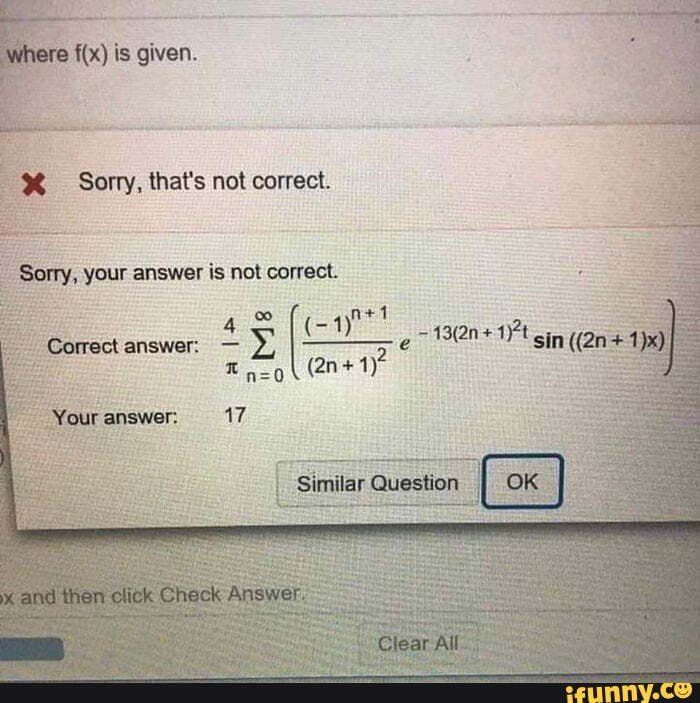
Few phrases sting quite like "Sorry, your answer is not correct." Whether it flashes across a screen, echoes from a teacher, or arises in a personal or professional interaction, this feedback can immediately trigger a mix of disappointment, frustration, or even self-doubt. But what if we could flip that script? What if every "incorrect answer" was, in fact, an invaluable invitation to learn, adapt, and ultimately, excel?
This isn't just about getting it right the next time; it's about transforming a moment of perceived failure into a powerful catalyst for profound growth. Our super pillar hub dives deep into this critical concept, exploring how we can reinterpret these moments across various facets of our lives – from academic pursuits to digital interactions and beyond. Prepare to unlock the true potential hidden within every single mistake.
The Initial Sting: Embracing the Emotional Response
It's natural to feel a pang when told your answer isn't correct. The intensity can vary wildly depending on the stakes, your personal expectations, or even how the feedback is delivered. Acknowledging these emotions – be it a mild annoyance or a deep sense of frustration – is the crucial first step. Suppressing them only hinders the learning process. Instead, we must process these feelings constructively, giving ourselves space to recalibrate before refocusing on the task at hand. Understanding how our brains react to mistakes is fundamental to moving past them; explore The Psychology of Learning from to fully grasp this powerful connection between emotion and educational success.
Unpacking the "Why": Decoding Your Incorrect Answers
Simply knowing an answer is wrong offers limited value. The real treasure lies in understanding why it was incorrect. Was it a knowledge gap, a misunderstanding of the question, or an incorrect application of what you thought you knew? Perhaps it was a procedural error, a lack of critical thinking, or even time constraints that led you astray. Pinpointing the root cause transforms a vague "wrong" into a specific area for improvement. This analytical approach empowers you to target your learning efforts precisely, making every subsequent attempt more informed and effective.
Crafting Growth: The Art of Effective Feedback
The way feedback is given profoundly impacts its effectiveness. Constructive feedback isn't merely about pointing out errors; it's about providing a clear pathway forward. It should be specific enough to highlight exactly where the mistake occurred, actionable enough to guide correction, and timely enough to remain relevant. Crucially, it must also be balanced and encouraging, fostering a growth mindset rather than instilling defeat. Learning how to Design effective feedback Improve corrective feedback is essential, whether you're an educator, a manager, or simply trying to communicate better with others.
Context is Key: Feedback in Diverse Settings
The principles of learning from errors and delivering effective feedback aren't confined to textbooks. They permeate every aspect of our lives, from formal education to our daily interactions with technology.
Enhancing Learning Environments: Quizzes and Assessments
In academic and training settings, quizzes and assessments are primary vehicles for identifying knowledge gaps. Yet, their true potential is often untapped if feedback is generic or delayed. Imagine an assessment that not only tells you what you got wrong but illuminates the thought process required to get it right. By understanding common pitfalls and best practices, educators can create a more powerful learning experience. Dive into strategies for Optimizing Quiz & Assessment Feedback to turn every test into a profound learning opportunity.
Navigating Digital Interactions: UX and AI
Beyond the classroom, digital platforms regularly inform us that our input is "not correct." Whether it's an incorrect password, a misformatted field, or an invalid command, the way these messages are presented significantly impacts user experience. Poorly designed error messages can lead to frustration and abandonment. However, thoughtful and helpful error feedback can guide users seamlessly to a successful outcome. For designers and developers, understanding Here are a few options for improving user interaction is paramount.
This becomes even more critical when interacting with artificial intelligence. Chatbots, for instance, are constantly processing our "answers" or queries. When they respond with a variation of "Sorry, I don't understand" or "Your input is incorrect," it's not a failure of the user, but a challenge for the AI's design. Learning to Master incorrect input handling is crucial for building intuitive and helpful AI experiences that truly serve users.
Your Journey Forward: Beyond the Red Mark
The phrase "Sorry, your answer is not correct" should never signal a dead end. Instead, it's an invitation to embark on a journey of improvement. This journey involves several key strategies: analyzing specific mistakes, actively seeking clarification, reviewing relevant materials, and consistently practicing. It also means seeking diverse perspectives, embracing self-reflection, and not being afraid to break down complex problems into smaller, manageable parts. Ultimately, maintaining a positive mindset and asking for help when needed are vital components of transforming errors into stepping stones towards mastery and success.
Every "incorrect answer" is a data point, a valuable piece of information telling you where the learning needs to happen. By approaching these moments with curiosity and a commitment to growth, you unlock an incredible capacity for personal and professional development. Embrace the feedback, learn from it, and watch as your understanding deepens and your capabilities expand.