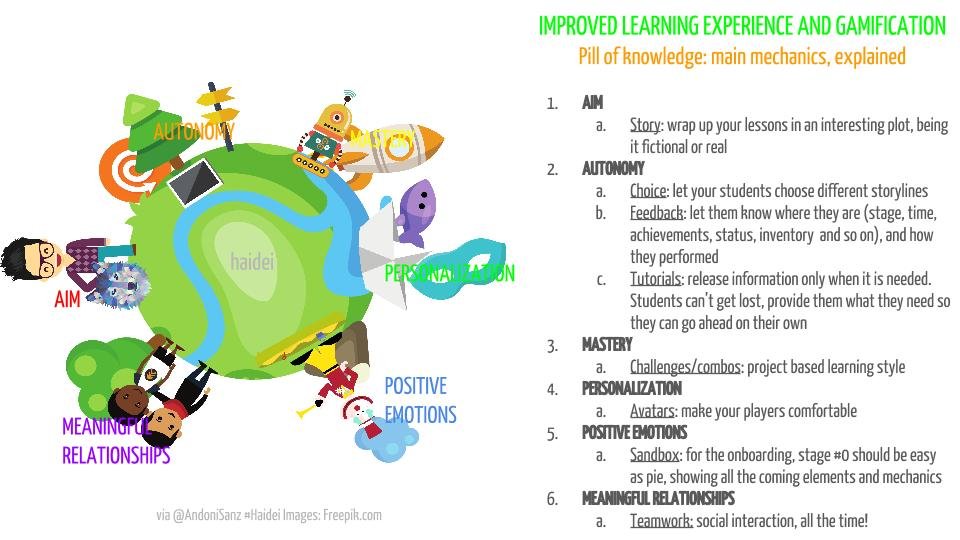
We've all been there: staring at a quiz question, guessing, getting it wrong, and then being told to "try again." For decades, that "wrong answer" moment was often a dead end, a quiet mark of failure. But today, the digital learning landscape is buzzing with a different approach, one that turns those missteps into part of the game. We're talking about the gamification of incorrect answer mechanics, where errors aren't just red marks, but opportunities for points, new chances, or strategic hints.
It's a powerful idea, born from the belief that learning should be engaging, motivating, and less anxiety-inducing. But does this playful approach truly foster deep understanding, or does it merely nudge learners toward superficial problem-solving, chasing rewards instead of mastery? Let's dive into this intriguing paradox.
At a Glance: Gamified Errors
- What it is: Integrating game-like elements into how learners encounter and respond to wrong answers (e.g., multiple attempts, hints, "health bars," progress tracking).
- The Big Goal: Boost engagement, reduce anxiety, encourage persistence, and promote a growth mindset around mistakes.
- Potential Upsides: Increased motivation, repetition for mastery, personalized feedback, valuable data insights.
- The Core Concern: Can lead to superficial learning if learners focus on "winning" the game rather than understanding the underlying concepts.
- Key to Success: Purposeful design that prioritizes why an answer was wrong and guides learners toward true comprehension, especially in low-stakes environments.
- When to Be Wary: For high-stakes assessments or complex conceptual learning, where deep understanding and validity are paramount.
The Allure and the Alarm Bell: Why Gamify Mistakes?
Imagine a classroom where getting an answer wrong isn't a deflating moment, but a prompt to "try again," perhaps with a helpful hint or a new visual cue. This is the heart of gamifying incorrect answer mechanics. It’s an evolution from the traditional pass/fail binary, aiming to infuse learning with the same addictive loops and rewarding feedback mechanisms found in popular video games.
The initial appeal is undeniable. Educators and instructional designers are constantly searching for ways to cut through apathy, reduce test anxiety, and make learning stick. Gamification offers a toolkit to do just that: immediate feedback, low-stakes trials, interactive challenges, and a sense of progression. When applied to errors, these elements promise to transform frustration into resilience, turning every misstep into a step closer to mastery.
However, a nagging question persists: in our quest for engagement, are we inadvertently promoting a shortcut mentality? Does the thrill of gaining points or unlocking the next level overshadow the crucial, sometimes uncomfortable, work of truly grappling with a mistake? This tension between "fun" and "fundamental" is at the core of the debate.
Beyond the Buzzer: What "Gamification of Incorrect Answer Mechanics" Really Means
When we talk about gamifying incorrect answers, we're not just referring to a simple "wrong answer" notification. It's about how the entire process of making and correcting an error is reframed within a learning environment.
Think of it like this:
- Multiple Attempts: Instead of one shot, you get two or three tries, often with diminishing points for subsequent attempts. This mirrors game lives or continues.
- Hints and Guided Feedback: After a wrong answer, you might receive a subtle nudge, a specific resource to review, or a progressively more explicit hint, guiding you toward the correct path without giving it away entirely.
- "Health Bars" or "Lives": A visual representation of your performance, where incorrect answers deplete your "health," adding a sense of consequence and urgency, much like a video game.
- "Respawn" Opportunities: In simulations or complex problem-solving scenarios, an incorrect decision might lead to a "game over," but you can "respawn" to try again, learning from the previous failure without permanent penalty.
- Progress Tracking & Mastery Paths: Incorrect answers might highlight areas for targeted practice, showing you how much more work is needed to "master" a skill or "unlock" the next content module.
- Points Deductions/Bonuses: Wrong answers might subtract points, while correctly identifying the error or using a hint efficiently might still award partial credit.
These mechanics are far more sophisticated than just a red 'X'. They are designed to create a psychological safety net, encouraging learners to experiment and persevere—qualities essential for deep learning, but also vulnerable to being hijacked by superficial engagement if not carefully designed.
The Double-Edged Sword: Benefits of Gamifying Errors
When implemented thoughtfully, gamified incorrect answer mechanics can be incredibly powerful learning tools. They tap into fundamental human motivators:
Boosting Engagement & Reducing Anxiety
Traditional assessments can be intimidating. The fear of failure often paralyzes learners, hindering their ability to recall information or think critically. Gamified error feedback, with its low-stakes trials and immediate, non-judgmental responses, can create a more psychologically safe environment. Learners are more likely to participate, take risks, and stay focused when they know a wrong answer isn't a permanent setback, but a temporary obstacle in a larger game. This increased engagement makes the learning process more enjoyable and sustainable.
Encouraging Iteration & Mastery
In many fields, particularly language learning or skill-based training, repetition is key. Gamified mechanics like multiple attempts or "try again" loops inherently encourage this iteration. Learners aren't just moving on; they're actively re-engaging with the material, refining their understanding with each attempt. This iterative process is crucial for solidifying knowledge and building muscle memory, transforming a simple "wrong" into a guided path toward "right." It allows for consistent practice, where the consequence of error is correction, not condemnation.
Data-Driven Insights for Learners and Educators
One often-overlooked benefit is the wealth of data generated. Gamified systems can track not just if an answer was wrong, but how many attempts it took, which hints were used, and what common errors recur across a group of learners. This provides invaluable data for both the learner (showing their progress and areas for focus) and the educator (highlighting problematic concepts, identifying where instruction might need adjustment). Traditional tests rarely offer this granular insight into the learning process.
Personalized Learning Paths
When errors are tracked, gamified systems can become adaptive. If a learner consistently makes a particular type of mistake, the system can automatically serve up additional practice problems, explanatory resources, or even alter the learning path to reinforce foundational concepts. This personalized approach ensures that feedback is not generic but tailored to individual needs, making the process of correcting errors far more efficient and effective.
The Slippery Slope: Where Gamified Errors Can Go Wrong
Despite the clear benefits, the gamification of incorrect answer mechanics isn't a silver bullet. Without careful design, it can indeed lead to some significant drawbacks, impacting the depth of learning.
The Superficial Learning Trap
This is the central concern. When the primary motivator becomes earning points, badges, or progressing through levels, learners might prioritize speed and "getting to the right answer" over actually understanding why their initial answer was wrong. They might resort to trial and error, guessing, or memorizing patterns of feedback rather than internalizing the underlying concepts. For example, if a system offers unlimited tries, a learner might click through options until they stumble upon the correct one, without ever pausing to truly understand why their answer was wrong. This is particularly problematic for high-stakes subjects where conceptual understanding is paramount.
Distraction from Core Skills
Poorly designed gamification can inadvertently shift a learner's focus from the educational objective to the game mechanics themselves. Are they engaged with the math problem, or are they just trying to beat the timer? Are they learning Spanish vocabulary, or are they obsessed with their "streak" or getting enough coins to customize their avatar? If the game elements overshadow the learning content, the "fun" can become a powerful distraction rather than an enhancer.
Motivation Mismatches
Not all learners are motivated by the same game elements. Leaderboards, for instance, can be highly motivating for some competitive individuals but deeply demotivating for others who consistently rank lower. Some adult learners might find overtly "gamey" elements or childish aesthetics off-putting, leading to disengagement rather than increased participation. Gamification isn't a universal motivator, and a one-size-fits-all approach risks alienating a significant portion of the audience.
Equity and Access Concerns
Many gamified systems rely heavily on digital interfaces, animations, and robust internet connectivity. This can create significant barriers for learners with disabilities (e.g., visual impairments, motor skill challenges), those with limited access to technology, or individuals in areas with poor internet infrastructure. If the primary learning pathway is gamified, it must be designed with universal accessibility in mind, or offer non-gamified alternatives to ensure inclusivity.
Purposeful Design: Avoiding Common Pitfalls in Error Gamification
The key to unlocking the potential of gamified incorrect answer mechanics lies in purposeful design. It's about how you gamify, not just that you gamify. The research on common gamification mistakes offers clear guidance:
Mistake #1: Gamifying for Gamification's Sake
The Pitfall: Slapping points, badges, or leaderboards onto existing content without linking them meaningfully to learning objectives. A badge for "answering 10 questions" is less effective than a badge for "mastering unit 3 concepts after three attempts."
The Fix: Every game element, especially those related to errors, must serve a clear pedagogical purpose. A "retry" button should be accompanied by feedback that encourages reflection, not just another guess. Badges should signify true skill mastery, not just participation.
Mistake #2: Losing Sight of the Objective
The Pitfall: The game itself becomes more compelling than the learning content. Learners spend more time customizing avatars or optimizing point-gathering strategies than engaging with the material.
The Fix: Ensure that achievements, challenge levels, and rewards are intrinsically tied to demonstrating deeper understanding and correctly applying knowledge. If a learner can "win" without truly learning from their mistakes, your design needs rethinking. The game should support learning, not replace it.
Mistake #3: Leaning on Demotivating Elements
The Pitfall: Over-reliance on leaderboards that can discourage lower-ranked learners or foster unhealthy competition. This is particularly true for errors; if making mistakes constantly pushes you down a public leaderboard, you're less likely to take risks and experiment.
The Fix: Consider more inclusive alternatives. Focus on individual progress tracking ("leveling up"), team-based challenges, or even "secret achievements" for those who diligently learn from their errors. The goal should be to motivate everyone to improve, not just the top performers.
Mistake #4: Not Catering to Diverse Learners
The Pitfall: Assuming all learners enjoy or benefit from gamified experiences. Many adults game, but their preferences vary wildly.
The Fix: Offer alternatives. While gamification can be highly effective, some learners prefer traditional, straightforward learning paths. Providing choices ensures inclusivity and respects different learning styles. Design elements should also be age-appropriate and culturally sensitive.
Mistake #5: Too Much, Too Soon
The Pitfall: Overhauling an entire curriculum with gamification in one go, leading to unexpected issues and learner backlash.
The Fix: Start small. Pilot a single module or a specific type of assessment with one gamified element related to incorrect answers (e.g., progressive hints). Gather feedback, analyze data, and iterate. This allows for refinement and ensures that the gamification truly enhances the learning experience.
Crafting Deeper Learning: Smart Strategies for Gamified Error Feedback
So, how do you design gamified incorrect answer mechanics that promote genuine understanding rather than superficial engagement? It comes down to shifting the focus from merely correcting an error to learning from it.
Narrative-Based Problem Solving: Errors as Plot Twists
Instead of isolated questions, embed learning into compelling storylines. An incorrect answer doesn't just mean "wrong"; it means the hero's quest hits a snag, a simulation veers off course, or a patient's condition worsens. The motivation to correct the error then stems from the desire to progress the narrative, creating a much richer context for learning. Correcting an error feels like solving a crucial puzzle piece, driving the story forward.
Progression & Unlocking Mastery: Errors Pave the Way
Think of incorrect answers as mini-challenges that must be overcome to unlock new content or progress to the next "level." Formative assessments become "end-of-level bosses" that require you to have mastered previous concepts (including those you initially struggled with). When a learner corrects an error, they gain access to new information or advanced topics, creating a tangible sense of accomplishment directly tied to overcoming a learning hurdle.
Interactive Simulations & "Respawn" Opportunities
For complex skills or decision-making, simulations offer a safe, low-risk environment to make mistakes. A wrong choice might lead to a negative outcome within the simulation, but the learner can "respawn" or reset to try a different approach, experiencing the consequences of their actions without real-world repercussions. This experiential learning from errors is incredibly powerful for developing practical skills.
Microlearning & Guided Missions with Rich Feedback
Break down complex topics into small, manageable "missions" or microlearning modules. When an incorrect answer occurs, provide immediate, targeted feedback. This isn't just "incorrect," but "Incorrect, because X. Review section Y." or "Here's a hint that might help." The feedback should be rich, explanatory, and ideally, interactive, allowing learners to truly understand why their answer was wrong before trying again.
Focus on Intrinsic Motivation: Autonomy, Competence, Connection
Design activities that allow learners autonomy in how they approach problems (e.g., choosing their learning path after an error), provide clear opportunities to demonstrate competence (e.g., a perfect score after multiple attempts feels earned), and foster social connection (e.g., team-based challenges where collective errors are discussed). These intrinsic motivators cultivate a deeper, more sustainable drive to learn from mistakes.
Metacognitive Prompts: Beyond "Try Again"
Instead of simply prompting "Try again," design systems that ask the learner why they think their answer was wrong, or what strategy they might try next. These metacognitive prompts encourage self-reflection and critical thinking, pushing learners beyond rote correction towards a deeper understanding of their own learning process.
The "Why" Over the "What": Cultivating True Understanding
Ultimately, the distinction between superficial and deep learning often boils down to the "why." A learner who simply corrects an answer without understanding why their initial choice was wrong has only achieved a surface-level win. A learner who grapples with the mistake, receives targeted feedback, and then consciously applies new knowledge to arrive at the correct answer has engaged in true learning.
Gamification, when done right, can facilitate this journey. It can make the process of confronting errors less daunting and more engaging, providing the necessary scaffolding for learners to dig into the root causes of their mistakes. It offers a spectrum of feedback, from gentle nudges to comprehensive explanations, ensuring that the "game" supports the cognitive heavy lifting required for true comprehension. The goal isn't just to get the right answer, but to internalize the logic behind it, making the learning durable.
When to Gamify (and When to Hold Back): A Decision Framework
Deciding whether and how to gamify incorrect answer mechanics requires a thoughtful assessment of your learning objectives and context.
Best Suited For:
- Low-Stakes Practice & Formative Assessments: Where the goal is exploration, repetition, and immediate feedback without significant consequences. Think practice quizzes, drills, or self-paced tutorials.
- Skill-Building & Procedural Tasks: Excellent for acquiring specific skills like coding, mathematical procedures, or language acquisition where iterative practice and immediate correction accelerate learning.
- Language Learning Platforms: Games, timed challenges, and interactive exercises are highly effective in building vocabulary, grammar, and pronunciation through repeated attempts and instant feedback.
- Encouraging Engagement in Dry Subjects: Can make otherwise mundane topics more palatable and encourage initial participation.
Exercise Caution For:
- High-Stakes Summative Assessments: For exams that determine grades, certifications, or critical qualifications, the validity, fairness, and reliability of the assessment must take precedence over entertainment. Gamified elements might introduce bias or distract from a true measure of knowledge.
- Complex Conceptual Understanding & Critical Thinking: While gamification can introduce these, relying solely on game mechanics for deep analytical skills might be insufficient. These often require sustained, quiet reflection and open-ended exploration that doesn't always fit neatly into game loops.
- Learners with Specific Needs: Always consider accessibility and offer alternative pathways for those who might struggle with digital interfaces or find gamified elements distracting or unmotivating.
Before implementing, ask yourself: Does this gamified mechanic genuinely aid in understanding the mistake, or does it simply help the learner "win" the game? If the answer is the latter, rethink your approach.
Looking Ahead: The Future of Learning from Mistakes, Gamified
The evolution of gamification, especially in how we handle errors, is far from over. As AI and adaptive learning technologies become more sophisticated, we can expect even more personalized and intelligent feedback loops. Imagine systems that not only identify what you got wrong but predict why you made that mistake based on your learning history and offer highly tailored micro-interventions.
Richer simulations, augmented reality, and virtual reality will create even more immersive environments where making mistakes feels consequential yet safe, providing unparalleled opportunities for experiential learning. The focus will continue to shift towards intrinsic motivation, designing experiences where the joy of mastery and the satisfaction of understanding far outweigh external rewards.
The future points towards a learning landscape where errors are truly seen as gifts—valuable data points that guide us toward deeper understanding, propelled by intelligent, thoughtfully designed gamified mechanics.
Your Next Move: Designing for Impactful Error Correction
As an educator, designer, or learner, your power lies in discernment. If you're building a learning experience, ask yourself:
- What's the core learning objective? Does the gamification of errors directly support it, or does it risk becoming a distraction?
- How can I provide meaningful feedback? Beyond "wrong," how can I explain why it was wrong and guide the learner to the correct understanding?
- Am I encouraging reflection or just rapid-fire guessing? Design for pauses, prompts for metacognition, and opportunities for true processing.
- Is this inclusive? Have I considered diverse learner preferences, accessibility needs, and potential motivational mismatches?
- Can I start small and iterate? Pilot a single element, gather feedback, and refine your approach based on what truly fosters deeper learning.
The gamification of incorrect answer mechanics holds immense promise for transforming how we learn from our mistakes. When approached with intentionality, a deep understanding of pedagogical principles, and a commitment to genuine learning over superficial engagement, it can be a profoundly effective tool, making every error a stepping stone on the path to mastery.